

Electric Underfloor Heating for Indian Homes in 2026

Why electric underfloor heating matters in 2026
electric underfloor heating is a practical comfort upgrade for Indian homes and hospitality projects in 2026. When people research electric underfloor heating, they want even warmth, clean floors, and a system that fits North Indian winters as well as hill-station homes. AQUAPROCESS designs electric underfloor heating with Danfoss technology so homeowners, architects, and facility teams can compare options with clear engineering detail.
Buyers comparing electric underfloor heating usually ask about cost, installation sequence, floor finishes, and controls. A well planned electric underfloor heating project starts with room goals, floor build-up, and whether electric or hydronic heat suits the space. Explore our overview of how underfloor heating works and the full electric vs hydronic comparison before you shortlist vendors.
In 2026, interest in electric underfloor heating continues to grow across residential and commercial briefs. The topic of Electric Underfloor Heating connects comfort, energy use, and invisible design. That is why project teams treat electric underfloor heating as an engineered system, not a decorative add-on.
How electric underfloor heating works under real floors
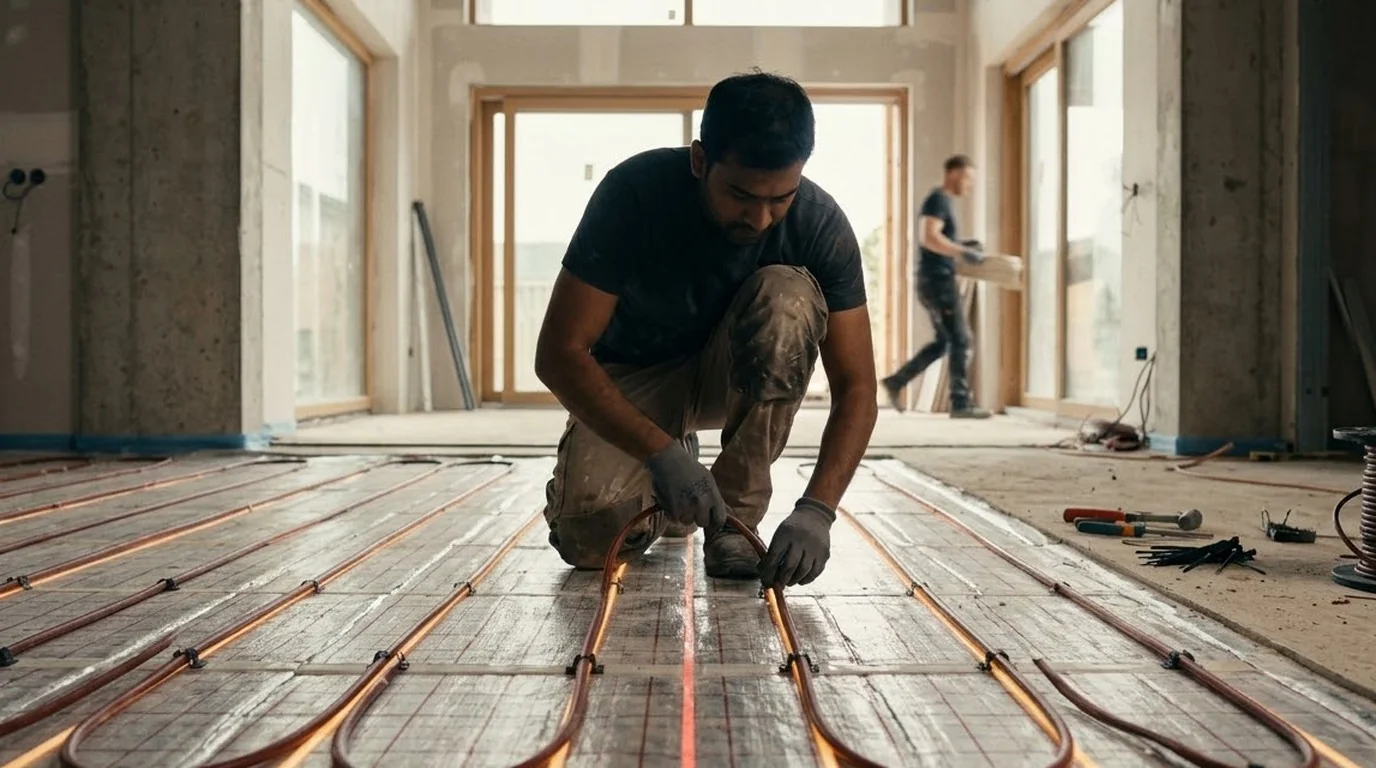
A typical electric underfloor heating build-up places insulation on the slab, then heating cable or mat, screed, and the finished floor. Sensors and thermostats keep surface temperatures in a comfortable band. This structure is why electric underfloor heating feels even underfoot on tile, stone, and wood.
Electric and hydronic systems differ in zoning, response time, maintenance, and plant requirements - electric heating cables suit zoned, fast-response projects, while hydronic needs water loops and add-on equipment. See the full Electric vs Hydronic comparison. For specialised needs beyond rooms, see human comfort applications. Researching electric underfloor heating also means checking controls and commissioning.
Commissioning matters as much as product choice. AQUAPROCESS walks through load calculation, layout, genuine Danfoss sourcing, installation coordination, and handover so your electric underfloor heating system performs as designed from day one.
electric underfloor heating for homes, hotels, and public spaces
Residential applications for electric underfloor heating cover bedrooms, bathrooms, living rooms, dining areas, pooja rooms, and home theatres. Commercial applications for electric underfloor heating cover hotel lobbies, offices, hospitals, schools, and retail floors where guest and staff comfort must stay consistent.
Human comfort applications for electric underfloor heating are organised so residential and commercial sit in one research path. That helps decision makers compare electric underfloor heating across property types without jumping between disconnected microsites.
Hospitality and wellness teams also specify electric underfloor heating for spas and treatment rooms where stone must stay at a steady temperature. When your brief includes pool decks or snow management, combine room comfort research with human comfort applications.
Planning cost, timeline, and genuine supply for electric underfloor heating
Installed cost for electric underfloor heating depends on system type, area, insulation, finish, and controls. AQUAPROCESS provides itemised quotations after understanding rooms and goals. In 2026, serious buyers expect transparent scope for electric underfloor heating rather than vague square-foot slogans.
Timeline for electric underfloor heating follows the flooring schedule. After design approval, installation is sequenced with screed and finish so the project stays on track. Maintenance for electric systems is minimal after commissioning; hydronic systems follow the connected plant care schedule. Clear scopes keep electric underfloor heating projects predictable.
Authenticity protects warranty and performance. As an official Danfoss channel partner, AQUAPROCESS sources products directly so every cable, mat, and thermostat on a electric underfloor heating project is traceable. Read more on how underfloor heating works and speak with the team via book a consultation.

2026 buyer checklist for electric underfloor heating
Use this 2026 checklist when shortlisting electric underfloor heating: confirm room priorities, floor finishes, electric versus hydronic fit, control zoning, and aftercare. Ask who designs, who supplies, and who commissions the electric underfloor heating system on site.
Marketing for Electric Underfloor Heating should stay factual. Strong electric underfloor heating content helps visitors research, leave, return, and then book a consultation when ready. That is the project-engineering approach AQUAPROCESS takes across India for electric underfloor heating.
If you are ready to move from research to a site or virtual assessment, book a consultation. For product range and layouts, download the brochure. Keep this guide bookmarked while you compare electric underfloor heating options through 2026.
Detailed planning notes for electric underfloor heating
Project teams evaluating electric underfloor heating should document room areas, finish types, insulation strategy, and control zoning early. AQUAPROCESS uses that brief to recommend electric or hydronic options for electric underfloor heating, align delivery with flooring contractors, and protect long-term comfort. In 2026, clear documentation remains the fastest path from research on Electric Underfloor Heating to a commissioned electric underfloor heating installation. Visitors comparing electric underfloor heating can also review applications, technology, and FAQs on the main AQUAPROCESS underfloor heating website before scheduling a call. A complete electric underfloor heating brief should list priority rooms, desired floor finishes, available electrical or plant capacity, and target occupancy dates so engineering can size the system correctly.
Architects specifying electric underfloor heating often coordinate early with interior designers so floor height, screed depth, and finish selection stay compatible. AQUAPROCESS supports that coordination with layout drawings and product data for electric underfloor heating. Facility owners comparing electric underfloor heating for hotels or clinics should also plan zone schedules that match occupancy patterns. The 2026 market for Electric Underfloor Heating rewards clear scopes, genuine supply, and commissioning records that travel with the building handover pack. When stakeholders ask how electric underfloor heating differs from radiators, explain radiant comfort, free wall space, and finish-compatible heat delivery in plain language.
Service teams after handover should know where sensors, thermostats, and manifolds sit for any electric underfloor heating installation. AQUAPROCESS includes that orientation in commissioning so operators can manage electric underfloor heating confidently. Researchers reading about electric underfloor heating in 2026 can move from this article to application pages, then to consultation when drawings are ready. Keep marketing claims aligned with engineered reality: electric underfloor heating performs best when insulation, spacing, and controls match the calculated load. That discipline is how AQUAPROCESS positions Electric Underfloor Heating for long-term residential and commercial value.
Project teams evaluating electric underfloor heating should document room areas, finish types, insulation strategy, and control zoning early. AQUAPROCESS uses that brief to recommend electric or hydronic options for electric underfloor heating, align delivery with flooring contractors, and protect long-term comfort. In 2026, clear documentation remains the fastest path from research on Electric Underfloor Heating to a commissioned electric underfloor heating installation. Visitors comparing electric underfloor heating can also review applications, technology, and FAQs on the main AQUAPROCESS underfloor heating website before scheduling a call. A complete electric underfloor heating brief should list priority rooms, desired floor finishes, available electrical or plant capacity, and target occupancy dates so engineering can size the system correctly.
Architects specifying electric underfloor heating often coordinate early with interior designers so floor height, screed depth, and finish selection stay compatible. AQUAPROCESS supports that coordination with layout drawings and product data for electric underfloor heating. Facility owners comparing electric underfloor heating for hotels or clinics should also plan zone schedules that match occupancy patterns. The 2026 market for Electric Underfloor Heating rewards clear scopes, genuine supply, and commissioning records that travel with the building handover pack. When stakeholders ask how electric underfloor heating differs from radiators, explain radiant comfort, free wall space, and finish-compatible heat delivery in plain language.
Service teams after handover should know where sensors, thermostats, and manifolds sit for any electric underfloor heating installation. AQUAPROCESS includes that orientation in commissioning so operators can manage electric underfloor heating confidently. Researchers reading about electric underfloor heating in 2026 can move from this article to application pages, then to consultation when drawings are ready. Keep marketing claims aligned with engineered reality: electric underfloor heating performs best when insulation, spacing, and controls match the calculated load. That discipline is how AQUAPROCESS positions Electric Underfloor Heating for long-term residential and commercial value.
Project teams evaluating electric underfloor heating should document room areas, finish types, insulation strategy, and control zoning early. AQUAPROCESS uses that brief to recommend electric or hydronic options for electric underfloor heating, align delivery with flooring contractors, and protect long-term comfort. In 2026, clear documentation remains the fastest path from research on Electric Underfloor Heating to a commissioned electric underfloor heating installation. Visitors comparing electric underfloor heating can also review applications, technology, and FAQs on the main AQUAPROCESS underfloor heating website before scheduling a call. A complete electric underfloor heating brief should list priority rooms, desired floor finishes, available electrical or plant capacity, and target occupancy dates so engineering can size the system correctly.
Architects specifying electric underfloor heating often coordinate early with interior designers so floor height, screed depth, and finish selection stay compatible. AQUAPROCESS supports that coordination with layout drawings and product data for electric underfloor heating. Facility owners comparing electric underfloor heating for hotels or clinics should also plan zone schedules that match occupancy patterns. The 2026 market for Electric Underfloor Heating rewards clear scopes, genuine supply, and commissioning records that travel with the building handover pack. When stakeholders ask how electric underfloor heating differs from radiators, explain radiant comfort, free wall space, and finish-compatible heat delivery in plain language.